

Press about us
Russia adds pressure to Ukraine with predictions of default
An advisor to Russia’s president warned that Ukraine’s already troubled economy would need a €35bn bailout to avoid default if it signs a free trade and association pact with the EU this November, in a clear sign of fresh pressure on Kiev to back away from western integration and instead join a Moscow-led customs union of former Soviet republics.
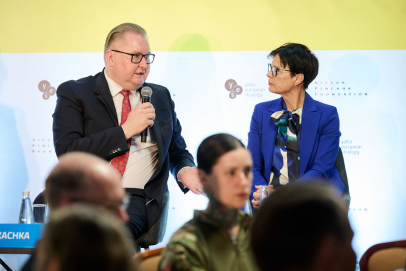
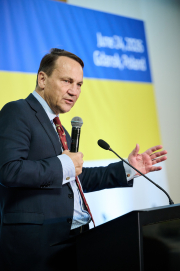
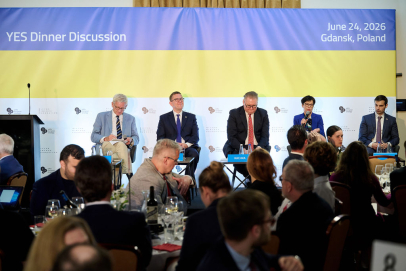
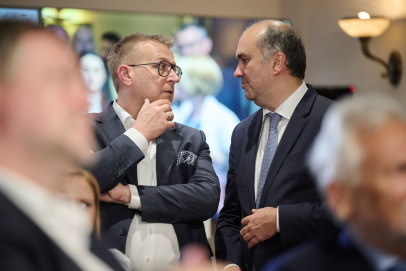
Speaking this weekend at the 10th annual Yalta European Strategy conference sponsored by Ukrainian billionaire Victor Pinchuk, Vladimir Putin’s aide Sergey Glazyev (pictured above) said Ukraine’s trade balance would turn catastrophically negative as local producers would struggle to compete with higher quality EU goods flooding the country.
Glazyev reiterated previous Russian threats to permanently introduce tighter controls and possibly trade barriers at the Ukrainian border, explaining that such measures would be needed to protect EU goods from further flowing into Russia via Ukraine.
Glazyev went on to ask: “If Ukraine signs this association agreement [with the EU], and after this faces a worsening trade balance, then the question arises: who will pay for Ukraine’s imminent default? The overall losses and cost of avoiding default by Ukraine will be €25bn, maybe €35bn. If we want to stabilise Ukraine’s economy, joining the Customs Union will help eradicate the current account deficit through lower prices on gas [imports from Russia,] cancelling export duties on oil. This is about $10bn dollars annually.”
Glazyev’s comments were widely viewed by Ukrainian officials, economists and politicians as a hysterical last attempt by Moscow to blackmail Kiev into backing away from the EU trade pact, with the hope of keeping Ukraine firmly within Moscow’s orbit.
Arseny Yatseniuk, a Ukrainian opposition leader, conceded that free trade with the EU will be challenging from a standpoint of competitiveness in the first year or so, but stressed that it would pay-off in the long term by forcing the country to reform and modernise, and become more integrated into global markets.
Speaking at the Yalta conference, Ukraine President Viktor Yanukovich reaffirmed EU integration and preservation of ties with Russia as top foreign policy goals. But EU sources made clear that signing of the landmark association and trade agreements still hinges on strengthening democracy and the release of opposition leader Yulia Tymoshenko. She was jailed two years ago on charges that are seen as politically-motivated.
Addressing the conference, Yanukovich made no clear indication that he himself would pardon her, but signalled that solving the Tymoshenko issue lies in a legal solution. The clock is ticking fast for Yanukovich to release Tymoshenko and demonstrate broader progress on democracy, enabling the EU agreements to be signed at a November EU summit in Vilnius.
He is simultaneously facing pressure on other fronts. Russia seems intent on making things even more difficult for Ukraine’s government, which is struggling to contain dwindling central bank reserves, amid large budget and trade deficits.
So far, officials have managed to keep the hryvnia local currency relatively stable, but with central bank reserves falling to below three months of import levels, devaluation is increasingly expected.
On Friday, Moody’s downgraded Ukraine’s credit rating citing (see chart) souring relations with Russia, which accounts for about a quarter of trade, and increased political and economic risks.
This just increases the urgency for Ukraine’s government to re-engage with the International Monetary Fund, to bite the bullet on tough IMF conditionality in order to land the $15bn bailout they claim to have long sought.