

Press about us
Turkey 'will probably never be EU member'
In the first such admission, Egemen Bagis, minister for European Union affairs, said that his country had to accept that its long cherished goal of joining the EU was likely to end in disappointment.
Turkey would, he said, probably end up with a similar status as Norway in relation to the EU, which is not a member but has access to the single market through free trade agreements.
"In the long run I think Turkey will end up like Norway. We will be at European standards, very closely aligned but not as a member," he said, adding that his prediction would only change unless attitudes changed towards his country, which would be the first Muslim nation to join the bloc.
Mr Begis, who is also Turkey's chief negotiator with the EU, said that despite modernising and growing its economy, his country was the victim of "prejudice" in its treatment by the EU and its defeated Olympic bid.
Claiming that accession remained Turkey's target, he urged the EU to "do what it does best, which is to grow".
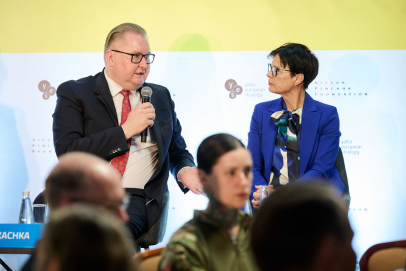
"That means putting prejudice away and accepting young dynamic nations like Ukraine and Turkey," Mr Bagis said at the 10th annual Yalta meeting, which is designed to promote European integration with Ukraine.
His remarks came as efforts to bring Ukraine closer to the EU have run into trouble. The signing of a treaty between the eastern European nation of 46 million and the bloc of 28 nations is in doubt over the government's refusal to release Yulia Tymoshenko, the former prime minister, from a seven-year sentence for fraud and embezzlement.
Russia has issued thinly veiled threats of reprisals if the former Soviet state forms a stronger partnership with Europe.
With rising anti-EU sentiment rising among existing members, Britain promising a referendum on membership and Iceland withdrawing its application because of the fragility of the eurozone, the prospects for enlargement are looking bleaker than champions of the European project would want.
Some EU officials admit privately they may have been hasty in accepting Bulgaria, Romania and Croatia, which joined on July 1. Serbia and Montenegro have applied to join but accession is years away and may be submitted to greater rigour than Balkan states that joined earlier.
Turkey's accession talks have essentially frozen for three years. France has always been a strong opponent while Germany objected strongly to the degree of force used by the Turkish security forces to break up anti-government demonstrations in Istanbul in June.
Turkey sees itself as a bridge between east and west, but is growing in confidence that it has begun to contemplate a future without the EU.
"They [the EU] should understand that they are not hurting me by putting me on the back burner they are hurting themselves," said Mr Bagis, who even suggested that had Turkey been a member earlier, then the eurozone would not have got into such trouble, because of his county's adherence to balanced budgets.
Expectations of joining have declined sharply among the Turkish public. In 2004, when a date for accession talks was given – 45 years after Ankara first requested them - in 2004, support for the EU was 78 per cent but in recent polls that was down to 45 per cent.
At the same conference Stefan Fule, the EU commissioner for enlargement, said despite the union's difficulties, it was right to seek to expansion.
"It is not a policy that should just be reserved for good times," he said. "In fact it makes me proud that at this time of difficutly that there are still countries knocking on the door. I only hope the referendum they will vote for what is best for the UK, which is to stay in the EU." The two-day conference is organised by the Ukrainian billionaire Viktor Pinchuk. Speakers included Bill and Hillary Clinton, Tony Blair and former CIA director David Petraeus.