Укр Eng

Press about us

24.01.2013

Will ‘Moocs’ bring down price of the Ivy League?

Will the rise of higher education in the US and elsewhere be curtailed by the expansion of Massive Open Online Courses (Moocs) that allow people to study digitally rather than attend lectures and classes? Some surprising people think so.

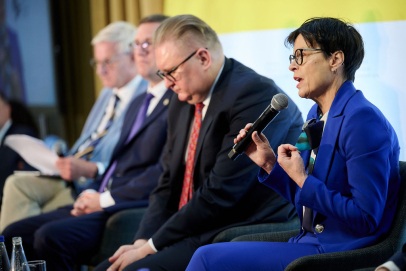
One of them is Rafael Reif, president of the Massachusetts Institute of Technology. He told a panel in Davos organised by the Victor Pinchuk Foundation, that he didn’t think institutions such as MIT could keep charging $40,000 a year for tuition in the digital world.

Mr Reif said the costs of undergraduate education split into board and lodging, lectures and seminars, and project and laboratory work. The lectures might be replaced in future by online education.

“Once classes are replaced by online courses, will they still be able to charge £40k for projects and labs. The answer is I don’t think so,” he told the panel.

The panel included a 12-year old Pakistani girl, Khadija Niazi, who had taken an astrophysics course, offered online by Udacity, a start-up founded by Sebastian Thrun, a research professor at Stanford university and former Google executive.

Lawrence Summers, former president of Harvard and a former US Treasury secretary, said that Moocs could be “profoundly transformative”. It was “insane for calculus to be taught 10,000 times in 10,000 different classes. We are on the way to it being taught by fewer people better”.

But Bill Gates, whose foundation funds some Mooc courses, was more sceptical. He said participation rates were still very low, despite them being offered free and the knowledge they offered had always been available through textbooks.


Author: John Gapper
Share |

Back to the list

Video

RSS All video
26.06.2026

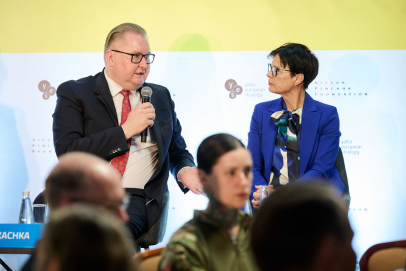
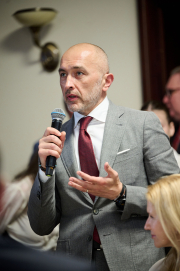
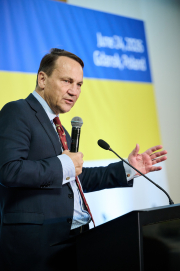
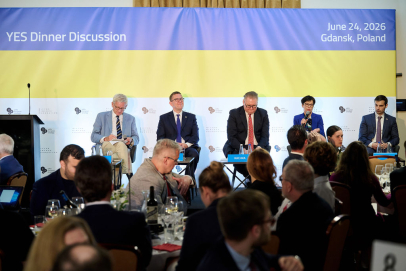
ICTV Report about YES Dinner Discussion in Gdansk. June 25, 2026

26.06.2026

What Ukraine Needs Now. Discussion on the eve of URC2026 in Gdańsk

28.05.2026

Ukrainian Veterans Leadership Program at Yale Jackson School of Global Affairs

28.05.2026

ICTV Video recap of the UVLP Program at Yale Jackson School of Global Affairs. May 26, 2026.

Pages 1 2 3 4 5 ... of 5
 

News

RSS All news

“Time for the West to assume the worst”: Conclusions of the roundtable discussion “How to support Ukraine and deter Kremlin aggression”

01.02.2022

The Victor Pinchuk Foundation, the Atlantic Council’s Eurasia Center and Yalta European Strategy hosted a roundtable discussion “How to support Ukraine and deter Kremlin aggression” in Kyiv. A delegation of retired US ambassadors and former government officials and experts focused on how Ukraine and its Western partners can work together to deter the threat of a new Kremlin offensive against Ukraine, which would also be a major blow against NATO, EU, and American interests.

Roundtable discussion “How to support Ukraine and deter Kremlin aggression”

28.01.2022

On Monday, January 31, 2022, from 8:30 am to 10:30 am EST, the Atlantic Council’s Eurasia Center, Yalta European Strategy and the Victor Pinchuk Foundation will hold a public in-person roundtable discussion “How to support Ukraine and deter Kremlin aggression”. The event will take place at Hyatt Kyiv Regency in Kyiv.

Survey “How The West Perceives Ukraine, and What The West Expects From Ukraine”

27.01.2022

A survey “How The West Perceives Ukraine, and What The West Expects From Ukraine” commissioned by the Victor Pinchuk Foundation and Yalta European Strategy (YES) demonstrated that Western public backs stronger support for Ukraine against Russia.

Pages 88 89 90 91 92 ... of 92
Created and supported by: «Art Depo» Creative Agency