

Press about us
Why a fancy education doesn’t always pay
Education has become unaffordable. Can technology bring down its costs fast enough and make it more accessible?
Just how much does it cost to educate a child? I suggested to Cost Centre #2 the other day that thus far Mr M and I had probably had to earn about £500,000 to educate each one of them, a figure he dismissed as exaggeration.
It is true I had plucked the figure from the air, but a bit of ready reckoning shows I might have underestimated it. CC#1, for example, was educated privately for his whole school career, which at current prices would cost just over £300,000. At the UK’s current tax rates this would require us to earn £600,000. This is all before uniform, school trips, transportation and so on. And people wonder why I refer to them as cost centres?
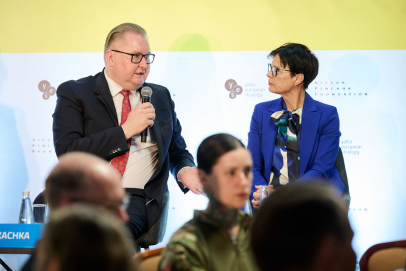
Education is always a hot topic, but especially now given the online dimension. Indeed, my colleague Gillian Tett discussed it last week in her column, “Welcome to the virtual university”, in the wake of a standing-room-only meeting in Davos that debated the merits of online education – an event I too attended. (I couldn’t possibly have missed it, because it was staged by Victor Pinchuk, the Ukrainian oligarch and philanthropist who came to my rescue in Davos last year when I broke my arm.) One of the most widely reported contributions came from Khadijah Niazi, a 12-year-old girl from Lahore who has already taken online courses in artificial intelligence and physics. She was also considering an online course in astrobiology – a subject I had never even heard of, never mind signed up for an online course on.
When I got home from Davos I demanded of CC#2 that he fill me in on what astrobiology might be. Given the expense of his education, I fully expected him to be able to tell me, and I was not disappointed. He explained it is about knowing where to look for life forms beyond the earth’s atmosphere.
CC#2’s school is supposedly one of the finest in the country, but it could have done with having a representative at Mr Pinchuk’s event. Here, verbatim, is an email I got from CC#2 asking if he could buy a maths textbook on Amazon: “This year the school is not going to give me an fp2 [further pure maths module] book. Please may I buy it using your credit card. I know you are wondering why they are not, but it’s a budget thing. There are online resources the school has set up, but they don’t work well and our teachers have told us to scrounge. There being a lack of fp2 students in the school means a lack of second-hand fp2 books, so I need to buy a new one.”
So, £10,000 a term and you have to buy your own £15 textbook because the online arrangements don’t work? I am stunned. After that I logged on with interest to the Twitter town hall event held on January 31 as part of the Global Education and Technology Forum. (This despite being rather a Twitter-phobe. I have a Twitter handle but do not tweet, so for those of you who have asked to follow me, you are not missing out on anything.) This was staged by the Global Business Coalition for Education, an organisation dedicated to achieving Millennium Development Goal Two, to ensure primary education for all. Shockingly, 61 million children of primary school age receive no education at all. The coalition’s advisory board includes John Fallon, the new chief executive of FT owner Pearson, and Laurene Powell Jobs (widow of Steve), who anchored the recent forum, with Gordon Brown and Twitter chief executive Dick Costolo answering questions live.
One tweet said developed countries spent $100,000 in total per child on education, compared with $400 in developing countries. This tells me what I already know: the cost centres are overindulged, with or without £15 textbooks. Education has become unaffordable. I hope that by the time I have grandchildren, technology will have brought the cost down. And helped make it possible for every child to have a primary education.