

Press-releases
Ways to Overcome the Economic Crisis in Ukraine were Discussed at the 5th Davos Ukrainian Lunch
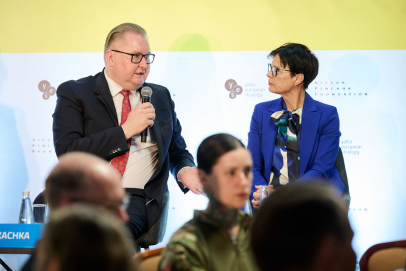
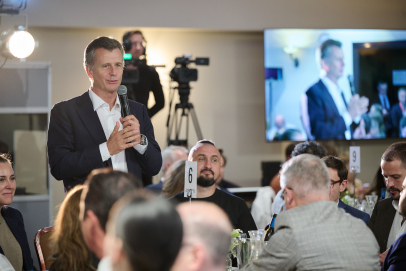
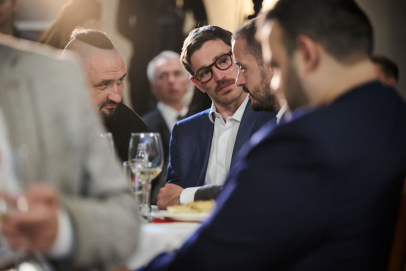
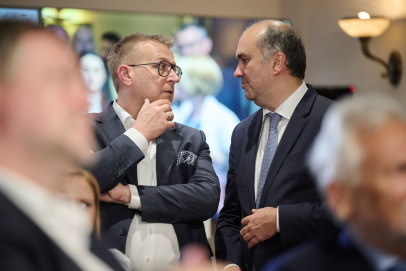
 The Victor Pinchuk Foundation and the international investment advisory group EastOne conducted the 5th Davos Ukrainian Lunch. This event organized since 2005 during the World Economic Forum gathers representatives from the world's business and political circles to discuss Ukraine's current issues and prospects of the country's development.
The overarching topic of the conference was finding the ways out from the present economic and political crisis in Ukraine. The participants of the discussion included Vice Prime Minister of Ukraine on European and International Integration Hryhory Nemyrya; Member of Parliament of Ukraine, Ex-speaker of Parliament of Ukraine Arseniy Yatsenyuk; financier, investor and philanthropist George Soros; famous columnist of
The New York Times newspaper, author of The World is Flat Thomas Friedman and the former European Commissioner for External Relations, Chancellor of the University of Oxford and Co-chairman of the International Crisis Group Chris Pattern will moderate the discussion.
"Ukraine is in a critical situation today -, stated in his opening speech the conference organizer, public figure and businessman Victor Pinchuk. - Following their assessment, all economists agree that Ukraine suffered the most. We are going through the economic and political crisis. There might be serious social consequences."
At the same time, even in the given situation, as Victor Pinchuk highlighted, Ukraine still has some advantages and reasons to be optimistic as to its future prospects. "Ukraine has already been through the difficult times, it's not happening for the first time. The country had similar experience before. The priority questions for today are - when and how to go out of the crisis."
As a first step to fight the crisis, according to the conference attendees, was reaching an agreement among the variety of state institutions and power branches of Ukraine. "Crucial problems are internal problems, which need to be resolved, - underlined in his address businessman and public figure George Soros. - There must be a consensus between the State bodies. For now, the relations are chilly and this disappoints all other countries. No one feels happy about it."
A similar opinion was expressed by Hryhory Nemyrya who underlined the significance of resolving internal issues, joining efforts of those in power and the opposition to put an anti-crisis strategy into practice. As one of the items of the strategic plan, Nemyrya suggested establishing a national anti-crisis agency, following Great Britain's example.
However, ex-chairman of Ukrainian Parliament Arseniy Yatsenyuk was skeptical about the chances of an immediate withdrawal from political crisis in the country. "The system of political chaos is a problem that won't be worked out after the crisis. You have better actors here in Europe, but we keep perfecting ourselves", he commented ironically.
According to Thomas Friedman, Ukraine in the critical situation should precisely outline its strategic priorities that would define the country's competitiveness on the world market for the nearest decades. "There are four major tasks for Ukraine. First: infrastructure, including public utilities, municipal economy and transport network. Second: the level of education that must be improved in order to integrate into the world and have presence in the world markets. Third: the regulatory policy of the government, tax policy, mobilization of investments, formation of investment climate and appropriate reforms implementation. And fourth: environment", Friedman outlined.
Discussing energy safety issues of Ukraine and Europe, Arseniy Yatsenyuk stated that should be involved in building a European system of power safety as an equal partner. Ukraine has to diversify its sources of power supply, by increasing electricity production including nuclear-power engineering, and rise exports of oil in view of today's prices on the world oil market.
Commenting on the outcome of the recent gas conflict in January 2009, George Soros pointed out the necessity of establishing a single policy on energy security of Europe. "If Ruhrgas or Gas de France was holding gas negotiations defending interests of the whole Europe and not only their native countries - we wouldn't have problems", he highlighted. The key element of the power security system, Soros explained, would have to be a supranational regulatory body with wide powers.
Furthermore, Ukraine would have to become a part of an all-European energy policy, George Soros mentioned. He called to stop accusing Ukraine in the "gas crisis". "This problem is not Ukraine's problem. Ukraine itself is dependent on the suppliers and cannot be the cause of the crisis", he stated.
Photos from the 5th Ukrainian Lunch are available on the Victor Pinchuk Foundation website at http://pinchukfund.org/en/media/photo-gallery/2009/987.html